praise for when you were human
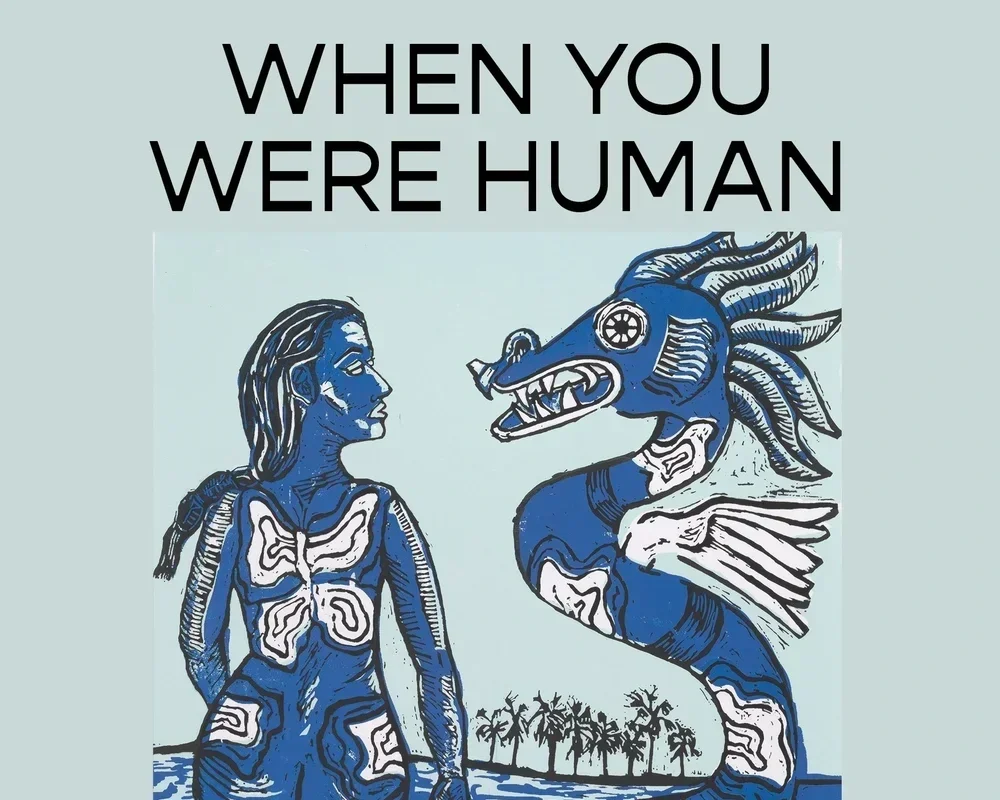
In Natalia Treviño’s luminous collection, When You Were Human, the speaker is “still learning the difference / between the prayer and the one who prays.” Which is to say, in Treviño’s poetic vision, the Virgin Mary becomes more than a sacred symbol—she is mother, witness, shelter, and wound. She is the prayer and she is also the one who prays. All of these all at once because this is Her nature: to be found everywhere and anywhere—as an air-freshener dangling from a rearview mirror, as a figure on a necklace, or as a tattoo on a young man’s arm. In these poems, divinity appears to us with “the faces we love,” be it son, Grandmother, or all the countless mothers who have lost a son to the State: “to chew tart blood, to press a knee to a neck.” Allusive and ekphrastic, Treviño’s language is also measured, devotional, grounded: “how much Mercy // will it take / for all the redemptions / we need,” she asks. How to measure faith? How to measure love? I pray you read this book for answers, although none might be found, but be assured that these poems, like the Holy Mother, will travel into the different countries of your heart as “miracles // do, without papers.”
—Octavio Quintanilla, author of The Book of Wounded Sparrows (Texas Review Press) & Las Horas Imposibles / The Impossible Hours (University of Arizona Press)
When You Were Human by Natalia Treviño makes the ordinary and the sacred sing in beautiful harmony. It connects the human body to nature and the supernatural. And it creates a tender intimacy between our icons and ourselves. In Treviño’s world, miracles and mercy wear sneakers; woes and wonders are joined at the hip. In short, these poems are magic.
—Cristina García, author of Dreaming in Cuban and Vanishing Maps
What a blessing to read Natalia Treviño’s collection of poetry, When You Were Human, is a meditation on the woman we know as—to keep it simple—Mary, the mother of Jesus Christ. The thing is, from the very first poem, it turns out I don’t know her at all, not in the Convert The Unbeliever sort of way, but in the many iterations as a body and an ethereal mother she has become to the faithful across centuries. With Natalia we travel across the U.S-Mexico border, across the Atlantic to the Basilicas in Florence, Italy, and to the furthest galaxies in the Universe to investigate the mystery of Mary as “Mom of Mercy,” “co-redeemer,” and car air freshener. Written in a voice that is erudite and unaware of its own humility, Natalia delivers a book of poetry that edifies and disabuses with wit and imagination that will hopefully move you to your core like it did me.
—John Olivares Espinoza, author of The Date Fruit Elegies
When You Were Human bends through a meditative journey on the many apparitions of the Virgin Mary, guiding the reader into a space where the personal and the spiritual intimately intertwine. Natalia Treviño’s poetic voice—filled with awe and reverence—reveals how the sacred feminine enters our lives, and the poems flow with an ecstatic diction that breathlessly conjures lyrical visions of la Virgen’s divine majesty. In this spiritual quest to understand mercy, sorrow, love, and the divine, Treviño’s venerable poems illuminate every facet of our humanity, portraying the Virgin Mary as mother, grandmother, Coatlicue, Tonantzin, and all her radiant manifestations. These poems invite slow, deliberate reading—each one a moment to savor, carrying the depth and richness of a sacred encounter.
—Adela Najarro, author of Variations in Blue
praise for lavando la dirty laundry

This writer warns us she is a woman like a "Mexican electric fence." And yet between the sheets, or between the murmur of the rolling pin, we are trusted to overhear confidences between intimates. It is on the white sheets of this book that a woman's most private confessions are transformed from dirty laundry to poetry luminescent as linen on the line. I truly feel gratitude for being allowed to read such private dialogues. It is a book that is a remove from other Texas writers in its capacity to encompass the globe, as Chicana poetry should in the new millenium. I feel very privileged to be allowed to give this book its blessing.
~ Sandra Cisneros, author of The House on Mango Street, Caramelo, Loose Woman, Have You Seen Marie, MacArthur Foundation Fellow
Throughout Natalia Treviño's sparklingly humorous, tenderly grim, and wise first collection, "dirty laundry" serves as a brilliant metaphor for a courageous, unblinking examination of interwoven cultures and generations. The poems of Lavando La Dirty Laundry give us the stories of wives, from abuelas and tias in Mexico, figures from Greek epics and the New Testament, as well as from the contemporary narrator who speaks of the sourness of a former marriage and the sweet nourishment of a new one that joins two cultures from opposite sides of the globe. Old, soiled laundry, in this collection, takes on new life, its cleaned threads glimmering with fresh breath in the intricate weavings of this must-read book.
~ Wendy Barker, author of Nothing Between Us: The Berkley Years, Winter Chickens, Poems from Paradise, UT Poet in Residence
Soaked in the bubbling sizzle of memorias hirviendo, these poems are everything but a stain rubbed clean. Sometimes the safest form of remembrance comes through the act of forgetting. But these are not safe poems. They do not have a safety net or a forewarning and they recall what some would rather forget. They are lessons in the comfort and healing that comes through sharing and telling. And tell they do. The poesia of the what-was, lying comfortably next to thepoemas of the what-is. That is what makes them so alarming!
~ Levi Romero, author of Sagrado: A Photopoetics Across the Chicano Homelandand A Poetry of Remembrance: New and Rejected Works, Centennial Poet of New Mexico
From legacies of last meals, laundries, lands and islands, and all along silver rivers where there could have been thunder outside, /islands above our heads, splitting the sky and surely sky splits and families tumble out fourteen lost babies and leave six surviving. Where the empanadas are sold at dawn, four kilos each morning,/ for your daughters, /their dresses, for school, the right dresses. Where someone must wake at three and start kneading as we need more nourishment before melanoma begins to peel away the organ of life once love is nourished in this, our, generation of living. And in Natalia Treviño’s Lavando la Dirty Laundry, we finally come to understand how we breathe, how hearts multiply/their rooms second by second/, how earth shifts to remind us/of new day, how air is enough/ to feed thousands of oceans and their pups. And how if we had known this, known what Trevino brings, we wouldn’t have spent so much time ripping/ blades of grass between (our) teeth/ to see how black storms/ enter their leaves as green light. And would have thought only flora/could feed on wisps, lap the light. Just as she guides us to know in this book of knowing. Treviño solidly delivers in her debut presentation, an admirable poetic; a knowing we all need, must read.
~ Allison Adelle Hedge Coke, author of Burn, Blood Run, Off-Season City Pipe, American Book Award Winner
This exquisite collection of poems by Natalia Treviño enchants and exposes, drawing the reader into its center surely, passionately, and as fiercely as a wildfire. Lavando La Dirty Laundry is sensual and direct, and wraps its articulate fingers firmly around your heartstrings until the reader is carried off on a magical tour through continents, cultures, languages, and marital states. Reaching everything from motherhood to cancer, and love to the hand of God, Treviño leaves us with indelible images of life at its most valiant. A premier collection by a young poet who exhibits clearly a master’s touch.
~ Carmen Tafolla, author of Sonnets and Salsa, Curandera, Poet Laureate of San Antonio